4201 Highlands Dr. McKinney, TX 75070

Expert Diagnostics: Finding Answers for Your Pet’s Health
We know how stressful it can be when your pet isn’t feeling well. Our friendly team is here to help by quickly and accurately figuring out what’s going on. With our experience and the latest technology, we’ll get to the root of the problem and create a treatment plan to help your pet feel better and back on their feet in no time.
Pet X-Ray & Diagnostics In McKinney, TX
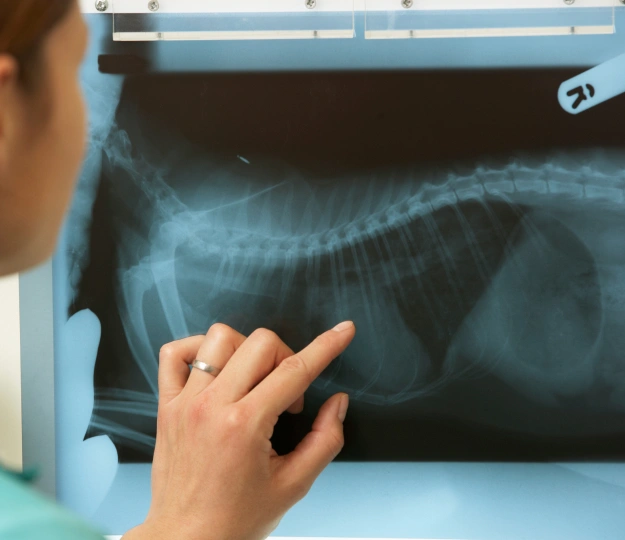
X-rays can diagnose conditions such as bone fractures, structural abnormalities, tumors, foreign body ingestion, and more.
The X-rays allow a trained technician to view the inner workings of the body by transmitting waves. The waves move through the body, and some bounce back to be picked up by the machine. The distribution of the waves through the body then creates an image representative of the internal structures, bones, and cartilage.
Our practice is able to provide clients with the most up-to-date form of this technology– digital X-rays. Unlike traditional film X-rays, digital X-rays can be stored on a computer and sent electronically with ease. They also take significantly less time to create, which means the pet is exposed to less radiation, and they do not have to be kept still for as long.
The quality of images provided by digital X-ray devices is also superior to the comparatively grainy and unrefined images produced by film X-rays.
Using the most advanced technology possible helps our McKinney veterinarians to make accurate and precise diagnoses. And even more important than the technology is the expertise of the professional deciphering them. Our veterinarians are highly trained and experienced in radiology and will use their years of experience to make the most scientific and accurate conclusions available.
Abdominal Vet Ultrasound In McKinney
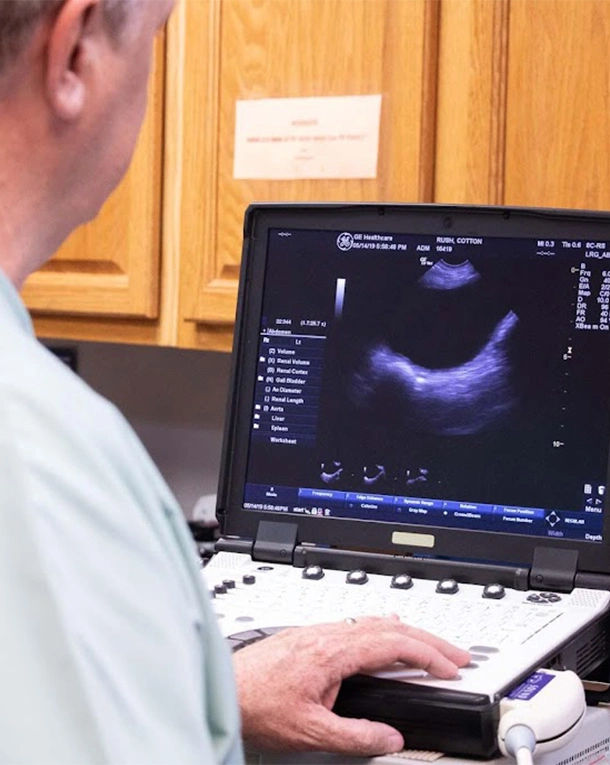
Highlands-Eldorado Veterinary Hospital offers advanced, full-service veterinary ultrasound in the Collins County area to identify and manage a range of health conditions, including tumors, tears, blockages, and other internal health concerns that require evaluation beyond a physical exam. Vet ultrasound (also referred to as veterinary sonograms) produces a more detailed view of internal structures compared to traditional X-ray, allowing us to see and diagnose difficult-to-detect issues.
What Vet Ultrasounds are Used for
Vet ultrasounds are completely safe and noninvasive. During the procedure, a veterinary ultrasound technician will prepare your pet for imaging by rubbing a cooling gel on the area of interest for the procedure. Sometimes, this involves shaving excess fur from the area. Next, your vet moves a handheld probe across the skin to produce a real-time video of your pet’s internal structures. Conditions that can be diagnosed and monitored with a veterinary ultrasound include:
Pregnancy
Expecting kittens or puppies is an exciting and nerve-wracking time. It’s important to monitor your pet’s health and fetal development regularly with a cat or dog pregnancy ultrasound. During an ultrasound, your veterinarian will identify the number of fetuses present, assess their size and position, and evaluate any risks the pregnancy may present.
Abdominal Issues
Symptoms like vomiting, diarrhea, loss of appetite, weight loss, fever, and bloody urine could indicate abdominal issues that need to be diagnosed or ruled out with a veterinary ultrasound. Before an abdominal ultrasound, your pet may need to fast for 8 to 12 hours so the veterinarian can get a clear picture of the abdominal organs, including the liver, kidneys, pancreas, and spleen.
Intestinal Disorders
If your primary care veterinarian suspects your pet may have an intestinal disorder, they may recommend an abdominal ultrasound to get a clear picture of your pet's stomach, intestines, and anus. Intestinal disorders that may be identified or ruled out with a veterinary ultrasound include colitis, ulcers, inflammatory bowel disease, and malabsorption.
Cancer/Abdominal Mass
A veterinary ultrasound can be used to identify cancer or an abdominal mass in your pet. The ultrasound examination allows the vet to visualize the size, shape, and location of any abnormal masses or tumors within the abdominal cavity and determine the best course of treatment.
Our Veterinary Ecography Experts
We specialize in diagnostic pet care, including veterinary echography, to diagnose pregnancy, abdominal issues, foreign body ingestions, cancer, and other disorders. They have been trained in ultrasonography and have successfully diagnosed and treated countless conditions in dogs and cats using ultrasound technology.
Find a Veterinary Ultrasound Near Collin County, Texas
At Highlands-Eldorado Veterinary Hospital, we welcome both existing and new clients seeking care from a nearby veterinary ultrasound specialist. Keep expert pet care close to home by scheduling your next appointment at our specialized vet care clinic in McKinney, Texas.
In need of medical attention but can't seem to get a timely appointment?
With flexible scheduling and convenient hours, we make it easy for you to get the care your pet needs when they need it most. Schedule online or call our hospital at 214-726-0838.
In-House Pet Laboratory Testing In MicKinney
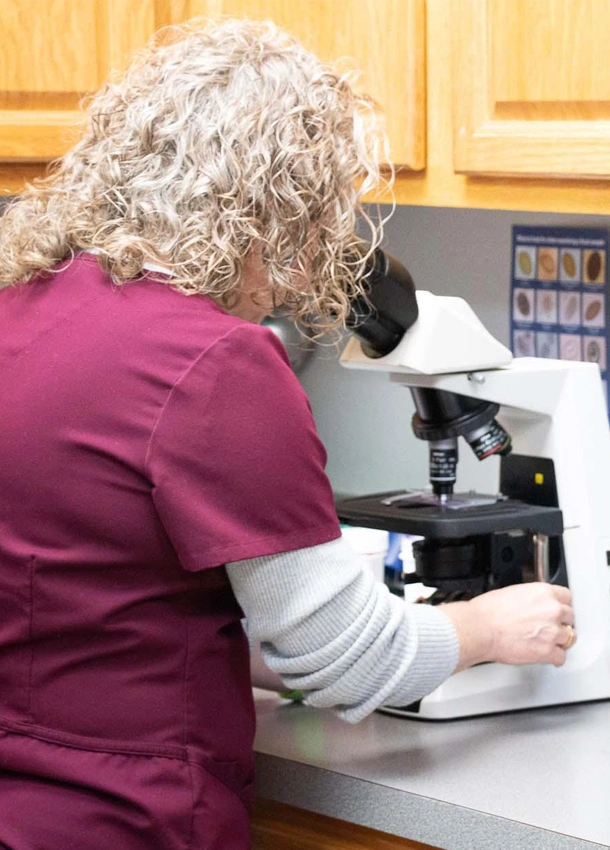
Instead of sending your pet’s samples to a separate laboratory facility for processing, we can test them at our own facility to expedite the diagnostic process. Our in-house laboratory provides accurate and timely results that you can trust because we monitor every step of the process, from collection to testing to interpretation.
The tests our McKinney veterinarians perform provide valuable information that goes beyond what we can gather from a physical exam alone, helping us find answers and get your pet the help they need.
Some of the tests we regularly run at our in-house laboratory center include the following:
Complete blood count (CBC) is a test which counts the ratio of different types of blood cells in the bloodstream. It can help us to diagnose anemia, infection, inflammation, and gives us insight into the health of your pet’s blood clotting functions.
A blood chemistry panel is a group of tests that give us important information about how specific organs, like the kidneys or liver, are working.
Electrolyte testing provides information about calcium, magnesium, phosphorus, and sodium levels in your pet's body. It can diagnose dehydration and provide insight into general bodily functions.
Thyroid tests measure the thyroid gland's production, which controls energy and metabolism. They can also detect thyroid disorders, which are particularly common among senior pets.
Urinalysis is a test performed on a urine sample. For senior pet care, this test is considered routine. It can diagnose kidney problems, urinary tract infections, and more.
Fecal tests are performed on a stool sample. They are primarily used to check for intestinal parasites such as hookworms, roundworms, whipworms, and tapeworms. This is a routine test that we recommend once yearly because of the prevalence of intestinal parasites among animals.
Allergy & Dermatology Testing For Pets
Our veterinarians in Texas are experienced in treating conditions affecting the skin, coat, ears, eyes, and feet. Commonly, dermatological conditions can make the animal suffering from them uncomfortable, irritated, and generally unhappy for long periods of time without treatment. We understand that when a pet is ill, it can affect the whole family. And unfortunately, many dermatological conditions are chronic or require long-term treatment; therefore, having a comfortable and communicative relationship with your veterinarian is key.
To provide relief for suffering pets, we must first diagnose the cause of the irritation using a physical examination, biopsies, information provided by the owner, blood tests, allergy tests, or a combination of these. Our in-house laboratory can help us provide accurate and fast results to begin the treatment process as soon as possible once diagnosed.
If you are unsure if your pet is dealing with a skin condition, look for these potential signs. A cluster of several signs, or one sign performed to an extreme, may indicate that it is time to seek veterinary help:
- Regular itching or scratching
- Biting the skin
- Licking the skin, particularly the paws
- Red and watery eyes
- Unusual aggression or irritability
- Increased vocalization, particularly whining
- Hiding from human attention
- Seeking more human attention than usual
Allergies are one of the most common dermatological conditions pets face. To determine if your pet is suffering from an allergy, an allergy test, which entails shaving an area of the body and exposing the skin to small amounts of allergens to determine their effect, may help us understand the condition. Depending on the severity and type of allergy, different options will be available for treatment, such as injections or medications.
In the warm and arid climate of Northern Texas, allergies to pollen or grasses can be brutal. Helping your pet to cope with allergies will be an ongoing process, but it will save them from potentially years of discomfort.